
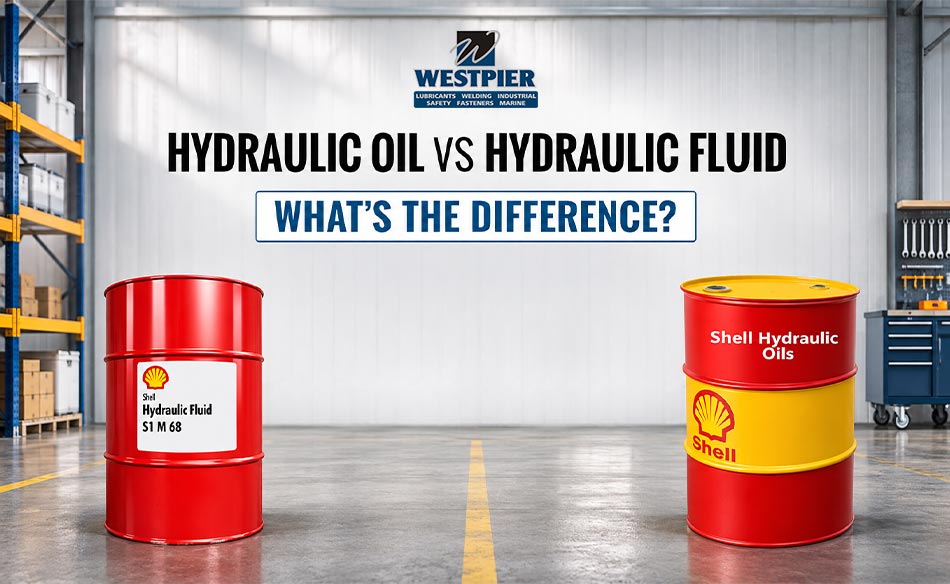
If you work around hydraulic equipment, you have probably heard people use “hydraulic oil” and “hydraulic fluid” as if they mean the same thing. In everyday maintenance conversations, that is common. But there is a difference between the two terms, and it matters when you are choosing a product for a particular hydraulic system.
Hydraulic fluid is the broader term. Hydraulic oil generally refers to an oil-based hydraulic fluid. Other hydraulic fluids may be water-based, fire-resistant, environmentally acceptable, or formulated with synthetic base fluids. What matters when choosing a product is the equipment manufacturer’s specification and the conditions the system operates under.
What is Hydraulic Oil?
Hydraulic oil is an oil-based product used in hydraulic systems to transfer power while lubricating and protecting internal components. Mineral oil is a common base, although synthetic oil-based formulations are also available. The formulation can include additives that give the oil specific performance characteristics, such as anti-wear protection, oxidation resistance, corrosion protection, and foam control. The exact combination depends on the product and the application.
You will find hydraulic oil in a wide range of equipment, including:
- Construction machinery
- Agricultural equipment
- Industrial hydraulic systems
- Material-handling equipment
- Mobile equipment
- Manufacturing machinery
It is important to remember that hydraulic oil describes the product type, but it does not tell you whether that product is suitable for a particular machine. For example, an AW 46 product combines an anti-wear designation with an ISO VG 46 viscosity grade. Those specifications are useful, but you still need to check the equipment manufacturer’s requirements before choosing the product.
What is Hydraulic Fluid?
Hydraulic fluid is the general term for the liquid that circulates through a hydraulic system. It transmits power between components while also helping with lubrication, heat transfer, and component protection. Hydraulic fluid does not always mean oil. Depending on the system and working environment, it can include:
- Mineral oil-based fluids
- Synthetic fluids
- Water-based fluids
- Fire-resistant fluids
- Environmentally acceptable fluids
That variety is important. A machine working in a normal industrial setting may have very different fluid requirements from equipment exposed to a fire risk, extreme temperatures or an environmentally sensitive location. So, while hydraulic oil is widely used in hydraulic systems, the term hydraulic fluid covers a much wider range of formulations.
Are Hydraulic Oil and Hydraulic Fluid the Same?
They can refer to the same product in everyday conversation, but there is a technical distinction.
A simple way to think about it is:
Hydraulic fluid = the broader category
Hydraulic oil = generally an oil-based type of hydraulic fluid
| Hydraulic oil | Hydraulic fluid |
|---|---|
| Generally refers to oil-based hydraulic products | Broader term covering fluids used in hydraulic systems |
| Often mineral oil-based, with synthetic oil-based options also available | Can include oil-based, synthetic, water-based, and specialty formulations |
| Common in mobile and industrial hydraulic equipment | Selected according to equipment and operating conditions |
| May include anti-wear and other performance additives | May have different properties depending on its formulation |
The confusion is understandable because oil-based hydraulic fluids are widely used, and hydraulic oil is a familiar term in workshops and maintenance settings. The distinction matters more when you are replacing a product. Two fluids can serve the same general purpose or even share the same viscosity grade without being suitable substitutes for one another.
What Does Hydraulic Fluid Do in a Hydraulic System?
Hydraulic fluid performs several jobs at the same time. Its exact performance depends on the formulation and the hydraulic system in which it is used.
Transmits Hydraulic Power
The fluid carries pressure through the system to operate hydraulic cylinders, motors, and other components. This is the fundamental function that allows a hydraulic system to transfer power.
Lubricates Moving Components
Hydraulic fluid provides lubrication for components such as pumps, valves, and other moving surfaces. Adequate lubrication helps control friction and wear under the conditions for which the fluid is designed.
Helps Manage Heat
Hydraulic systems generate heat during operation. The circulating fluid carries heat away from components and toward areas where it can be dissipated.
Helps Protect Components
Depending on the formulation, additives can help protect hydraulic components against wear, oxidation, and corrosion.
Supports Contamination Control
Hydraulic fluid circulates through the system, carrying contaminants toward filtration points where the hydraulic system can remove them. Keeping the fluid and system clean is important for reliable hydraulic operation.
What Types of Hydraulic Fluid Are Available?
Hydraulic fluid is not limited to one formulation. Different applications can call for different types.
- Mineral Oil-Based Hydraulic Fluid: Mineral oil-based hydraulic fluids are widely used across mobile and industrial applications. They are available in different viscosity grades and additive packages to meet specific equipment requirements.
- Synthetic Hydraulic Fluid: Synthetic formulations use engineered base fluids and may be selected where particular temperature, oxidation, or other performance characteristics are required. Suitability depends on the individual formulation and equipment specification.
- Fire-Resistant Hydraulic Fluid: Some applications require hydraulic fluids with fire-resistant properties because of the working environment. These products are used in specific applications where reducing fire-related risks is an important consideration.
- Environmentally Acceptable Hydraulic Fluid: Environmentally acceptable hydraulic fluids are developed for applications where environmental considerations are particularly important. They may be used in areas such as marine operations, forestry, or other applications where accidental fluid release could have environmental consequences.
These fluid categories should not automatically be treated as substitutes for one another. The equipment manufacturer’s requirements and the fluid supplier’s technical documentation should be checked before changing fluid types.
Why Does Hydraulic Fluid Viscosity Matter?
Viscosity describes a fluid’s resistance to flow. In hydraulic systems, selecting the correct viscosity is important because both excessively high and excessively low viscosity can affect system operation. Common hydraulic viscosity grades include:
| ISO VG grade |
General description |
|---|---|
| ISO VG 32 | Lower-viscosity hydraulic fluid |
| ISO VG 46 | Mid-range viscosity commonly used in hydraulic applications |
| ISO VG 68 | Higher-viscosity hydraulic fluid |
ISO VG classifications are based on nominal kinematic viscosity at 40°C. A higher ISO VG number represents a higher viscosity at that reference temperature. That does not mean a higher grade is automatically better. The correct grade depends on the hydraulic system’s design, operating temperature and manufacturer’s requirements.
Temperature is particularly important. As temperatures fall, fluid generally becomes more viscous. As temperatures rise, viscosity decreases. A fluid needs to maintain suitable flow and lubrication characteristics across the conditions the equipment is expected to experience.
How Do You Choose the Right Hydraulic Fluid?
The equipment should be the starting point when selecting a hydraulic fluid, not simply the product name.
Check the Manufacturer’s Specification
The equipment manual should identify the required fluid type, viscosity grade, performance standard, or other specifications. These requirements should be checked before selecting a product.
Match the Viscosity
Confirm whether the equipment calls for ISO VG 32, 46, 68, or another grade. Consider the equipment’s normal operating temperature as well as the surrounding environment.
Review Performance Requirements
Depending on the hydraulic system, you may need to consider anti-wear performance, oxidation stability, corrosion protection, foam control, water handling, and other properties.
Consider the Working Environment
Construction, agriculture, manufacturing, and mobile equipment can operate under very different conditions. Heavy loads, continuous operation, cold starts, high temperatures, and environmental exposure can all affect fluid selection.
Check Compatibility Before Changing Products
Do not assume that two hydraulic fluids are interchangeable simply because they have the same viscosity. Different fluid formulations and additive systems may have compatibility limitations. Shell’s hydraulic fluid documentation distinguishes between mineral-oil-based fluids and other fluid types and advises against mixing certain categories. Always check the manufacturer’s recommendations and product documentation before mixing or changing fluid types.
Frequently Asked Questions
Is hydraulic oil a type of hydraulic fluid?
Yes. Hydraulic oil generally refers to an oil-based hydraulic fluid. Hydraulic fluid is the broader term and can also include synthetic, water-based, and specialty formulations.
Can I replace hydraulic oil with hydraulic fluid?
That depends on the type of fluid and what the equipment manufacturer specifies. A product from a different fluid category may not be suitable simply because it performs the same general function.
Can I use ISO VG 46 instead of ISO VG 32?
Not unless the equipment specification allows it. ISO VG 46 has a higher viscosity than ISO VG 32 at the reference temperature, so changing grades can affect how the hydraulic system operates.
Can different hydraulic fluids be mixed?
Not automatically. Fluids with the same viscosity grade can still use different base fluids or additive systems. Check compatibility before mixing or changing products.
What is the most common hydraulic oil viscosity?
ISO VG 32, 46 and 68 are commonly encountered grades, but there is no single viscosity that suits every hydraulic system. The equipment manufacturer’s specification should determine the grade.
Can tractor hydraulic fluid be used in an excavator?
Not necessarily. Some tractors use multifunctional fluids that also serve transmission, final-drive, or wet-brake functions. Excavators may call for a dedicated hydraulic fluid. Always check the specifications for the individual machine.
Selecting Hydraulic Fluid Based on the Application
There is no universal answer to whether a hydraulic oil or another type of hydraulic fluid is right for a particular machine. The decision starts with the equipment manufacturer’s specifications and then comes down to factors such as viscosity, fluid type, performance requirements, operating temperature and compatibility.
At WestPier, we supply industrial lubricants and hydraulic fluid products for a range of equipment and operating environments. Our team can help you review product specifications alongside your equipment requirements, whether you are maintaining mobile machinery, industrial equipment, or another hydraulic system. That practical approach helps keep product selection tied to the application rather than relying on a product name or viscosity grade alone.